
Solving the Problems of Girl Child Education in India
Thursday , 27 November 2025- 5 min. read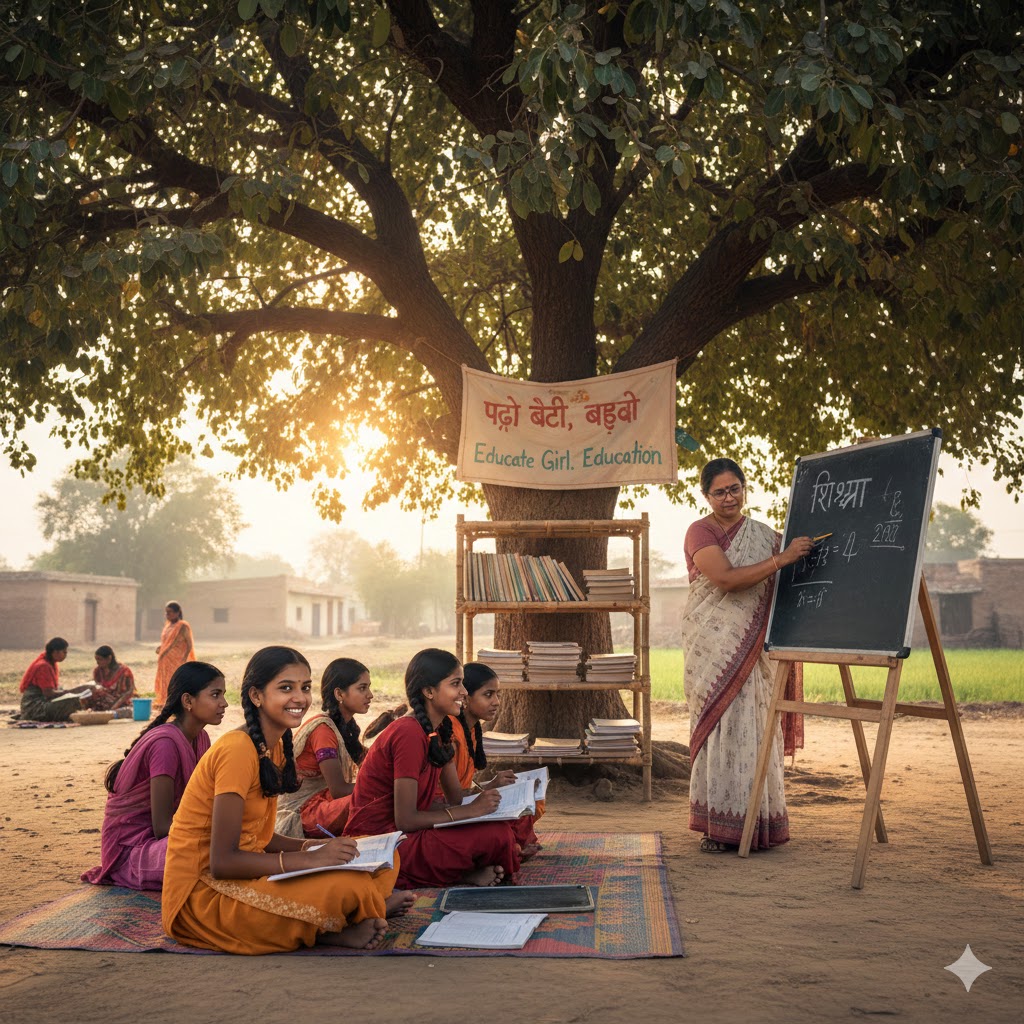
Donate for Girls Education
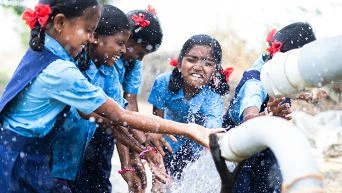
As you explore any of India's rural or small communities, you will see many young ladies attending school; they are wearing crisp uniforms, and they have bright, hopeful eyes, filled with potential. But even though there are so many young ladies going to school today, the journey towards making every young lady educated is still not over. The reality of education for young women in India is one of perseverance against all odds, through very deep cultural, economic, and social barriers.
For India to realise the objective of inclusive and full growth, it must educate every young woman in the country, not as an option but as a requirement. The following are some of the current issues, the reality of what is happening on the ground, and what possible solutions may be able to bring about a fundamental change in the environment.
The State of Girl Education in India
India has progressed significantly regarding improving female literacy and enrolment for girls, partly due to the increase in campaigns such as Beti Bachao Beti Padhao and the Sukanya Samriddhi Yojana, which have drawn increased public awareness, including increased attendance at the national level. The findings from the Unified District Information System of Education (UDISE) show that more than 48 percent of female students at the elementary level were enrolled in school.
Despite recent advances, educational progress in India remains disproportionate throughout the country due to geographical, social, and demographic factors. Urban areas tend to have higher literacy and retention rates than rural areas and tribal populations. In many cases, adolescent girls drop out of school even sooner than their male counterparts. Girls experience high dropout rates after primary school due to economic disadvantage, early marriage age, long distances to school, and cultural stigma against educated females.
Understanding Why There Are Key Issues Regarding Educating Girls in India
The issues of educating girls in India are not detached. They relate closely to long-standing historical inequality, gender bias, and economic deprivation; therefore, understanding these issues will be the first step towards solving them on a large scale.
Cultural Norms and Gender Bias Affecting Education
In many households across India, there remains a culture that values sons over daughters. Many families still believe that daughters will have to take care of their families once married, so they are not encouraged to invest in their daughters' education. While this view is slowly changing, many parents still discourage educating their daughters.
Economic Barriers to Education
Low-income households are wary of direct and indirect expenses associated with sending a child to school, such as uniforms, books, transportation costs and lost labor from other family members at home. When forced to make a decision, many families will choose not to educate their daughters.
Safety and Security - Accessibility issues for girls
Access to education is further complicated in rural areas of India. In many areas, schools are often far from home, with girls having to walk several kilometers each way. Parents often fear for their daughters’ safety, especially when traveling through areas with limited transportation options and/or limited safety. As a result, many families do not encourage their daughters to continue pursuing their education beyond primary school.
Marriage and Child Labour
In some regions, social pressures continue to force girls into early marriage. Once married, girls seldom have the opportunity to return to school. Many communities also expect girls to help with household duties and/or income generation rather than focus on their studies.
Lack of Infrastructure for Schools
In addition to the above, the lack of basic infrastructure in many schools often creates an additional barrier preventing girls from receiving an education. The lack of separate toilets for girls, in addition to other hygiene issues, serves to impact school attendance.
Unawareness of the Benefits of Education
A more common barrier is that many parents are unaware of the long-term advantages of educating their daughters. Many parents are more concerned about immediate survival than they are about empowering their daughters through their education.
The Value of Educating Girls
The benefits of enabling girls to go to school, or providing equal access to education, extend beyond just creating equal opportunities. The ultimate goal of providing equal opportunities for girls to go to school is to enable girls to have the potential to contribute to improving their communities. Educated girls usually earn more money than their non-educated peers, make better decisions about health and lifestyle choices for their families, assess getting married or starting their own families, and raise their children to be educated citizens. According to a report on the impact of education on women and girls, an additional year of education can increase a girl's income potential (future earnings) by 10% - 20% depending on the circumstances. By increasing the number of trained women in the workforce, increasing productivity, and slowing population growth, educating girls creates economic opportunities for all countries.
The Current Reality of Girls' Education in Rural India
The issues surrounding girls' education can be clearly seen in rural India. In rural India, many factors—poverty, tradition, and infrastructure—contribute to the educational problems for girls. In rural communities, schools typically exist at greater distances than those found in cities; therefore, the amount of training given to teachers can be limited, and the number of students in the classroom varies greatly in size.
The COVID-19 pandemic has resulted in many children being unable to continue their education in school; therefore, most children have turned to the internet and other digital tools to continue their education at home. Unfortunately, many families living in remote areas do not have access to a smartphone or reliable internet service, which has created a situation where many rural females can no longer receive an education through remote teaching, creating an even larger gap in education than was already present.
Even with these difficulties, there are numerous encouraging accounts of young women who, after being absent from school for a prolonged period of time, were able to return to school because of community learning centres established by local women to advocate for girls' educational access.
Other communities created similarly can expand throughout communities and across states with assistance from both the Government and Non-Governmental Organisations (NGOs).
Government Programs Building Girl Child Education
In India’s history, many different types of Government initiatives were created to help support and improve Education for young women and girls. Many of these initiatives helped by providing support for girls who may have otherwise had to drop out of school because of outside influences. Additionally, these initiatives provided financial support to parents and helped advocate on behalf of girls and women for their right to receive an education. Two of the most well known Government programs designed to assist Education and increase the number of girls enrolled in educational institutions are the Beti Bachao Beti Padhao (BBBP) Program and the Kasturba Gandhi Balika Vidyalaya (KGBV) Program. BBBP was created as an attempt to help eliminate or reduce gender imbalances associated with Education and is intended to provide community outreach and opportunities for community members to help the Government meet the goals associated with the program.
- The KGBV is a program designed to establish and operate residential schools for girls living in rural areas of India, where they may be experiencing poverty or are at risk of poverty. In addition to providing girls in these areas with an opportunity to obtain an education, KGBVs also provide safe places for these girls to live while they are pursuing their academic goals.
- Sukanya Samriddhi Yojana: This Government programme encourages and facilitates parents to save money for their daughters' education and future through a small deposit savings account.
- National Scheme of Incentive to Girls for Secondary Education (NSIGSE): Under this programme, a financial reward is available to girls who complete class VIII and continue their education up to and including class XII.
- Mid-Day Meal Scheme: Although a programme for all students, the Mid-day Meal Scheme supports girls to stay in school by eliminating the nutritional gap and providing meals every day.
In spite of these positive developments, the challenges with regard to ensuring that any measure designed to benefit girls through education is implemented effectively and monitored on an ongoing basis still exist. Some measures may not be well-known to those in their vicinity, while others may be hindered by delays imposed by the bureaucracy. A consistent problem is ensuring that benefits actually reach the intended recipients.
The Solutions for Girl Education: Solutions that Truly Work
To change the way that India educates girls requires that India address multiple systemic barriers: Acknowledge and address barriers to access; Improve the affordability of education; Create an environment that is free of Fear for girls in terms of personal safety and security; Increase awareness of the importance of girls' education; and improve the quality of the education being provided to girls.
Infrastructure Improvements
Infrastructure improvements create a direct incentive for parents to send their daughters to school. All schools must have basic amenities (restrooms, secure surrounding areas, adequate lighting and safe transportation routes).
Awareness Campaigns: Involvement of Parents and Community
Involving parents in the conversation about education is critical to effecting change. Awareness campaigns must provide education to the parents and families on how education can change the quality of the lives of their families, as well as the lives of their daughters. For example, workshops, storytelling, or mothers’ groups would provide the opportunity for parents and families to learn how education can improve their daughters' livelihood and health outcomes.
Financial Incentives and Financial Support
Scholarships, Conditional Cash Transfers and materials provided free of charge assist families in paying for the expenses associated with sending their daughters to school. The collaboration of Governments and Corporate Social Responsibility (CSR) programs has provided the means for more expanded availability of these types of benefits.
Safe Schools and Local Options
Getting kids back into school and keeping them in school until graduation. Establishments of neighborhood schools located close to where children live or providing a reliable means of getting to school greatly reduce the rate of dropouts. In addition, girls who require further support, residential establishments for senior girls (like KGBVs) provide a safe place for learning throughout secondary school years.
Vocational Skills and Digital Learning
A big barrier to the digital divide is inaccessibility. Low-cost tablets and community-based technology hubs will assist girls from rural areas to have the same advantage of digital learning. In addition, educational programs linked to particular skill sets and jobs provide an incentive for girls to increase their employability and achieve financial independence.
Implementation of Existing Policies to Prevent Child Marriage and Child Labor
Many countries have laws to prevent forced marriage and child labor, but most countries are not implementing them effectively. The most effective means of preventing girls from being forced out of school before graduation is to enforce policies to prevent forced marriage and child labor.
Employing More Female Teachers
Employing female teachers provides many advantages for both female students and society at large. For instance, not only does a female educator act as a mentor for her pupils, but she also offers a safer and more comfortable learning environment to her female pupils. By having more female teachers in schools, female students can see their education as having a higher level of worth, increase their self-confidence about attending school on a regular basis and therefore experience greater rates of attendance and graduation.
By forming alliances with the help of private sector partnerships and also with the help of Non-Governmental Organizations (NGOs), smaller organisations at a local community level have a better understanding of what is happening in their own communities than large bureaucracies. Therefore, the NGO or local community organisation can create more programmes at the grassroots level, thus bringing in and working with a greater number of communities and creating better and more efficient ways to deliver services to those communities.
At the same time, local communities can assist in helping young women continue their education and not prioritize marriage, at least until they have completed their formal schooling. The community can create safe areas for girls to learn together, provide peer support to each other, and publicly recognise girls’ success in school.
- Schools can use inclusive teaching methods and provide mentorship.
- Companies and NGOs can assist with sponsorships or create mentorship networks and school initiatives for schools.
- The media can showcase the many success stories of women with modest backgrounds to encourage others to pursue their education.
- When a village, town or workplace supports girls’ education collectively, the cultural norms will intrinsically evolve over time.
Where Change Starts
The change will commence when education ceases to be treated as a charity for girls and begins to be viewed as a fundamental right for girls. The problem now is not that people are unaware; it is the lack of sustained action. It is about ensuring that schools are functioning effectively, teachers arrive to teach, policies reach the grassroots level and that families view their daughters' education with the same importance as their sons’ education.
An ideal future is when girls' education will not be celebrated as an exception; it will be assumed, expected and accepted as "normal" behaviour as part of the fabric of equality.
India’s journey toward universal girl child education is ongoing but hopeful. Progress may sometimes appear slow, yet every new girl who completes her schooling adds strength to the foundation of a better nation. Advancing girls’ education is the key to building India’s future. The process of supporting girls’ education is not simply an act of charity; rather, it involves developing and strengthening an environment where every girl has the freedom and opportunities to learn, develop, and become leaders.
.png)
.png)
.jpeg)