

The Basics of CSR
CSR in India is largely governed by Section 135 of the Companies Act, requiring qualifying companies to spend a minimum of 2 percent of their average net profits from the last three years on CSR activities. A typical company will use the CSR budget on initiatives related to education, health, environment, rural development or other initiatives as described in Schedule VII.
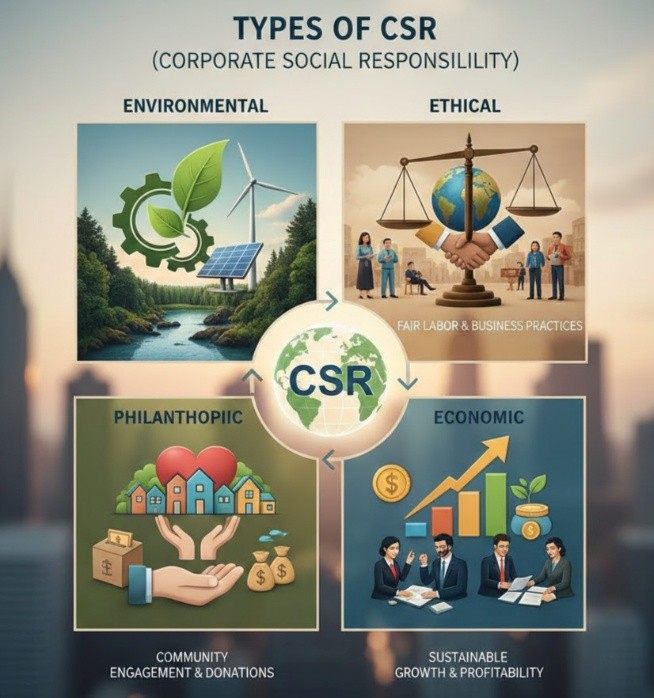
Types of CSR
Companies in India structure their CSR into a few broad categories.
Direct implementation is when a company designs a project and implements it through its CSR team or foundation.
Implementation through NGO's or social enterprises is when funds are granted to credible partners who are experts at designing and delivering projects in communities.
Collaborative models mean that companies work together to co-fund large flagship projects that may be in education, health, rural development, or climate action. CSR exists in these collaborative models, in the form of program funding, infrastructure building, volunteering initiatives, or even capacity-building with frontline organisations and communities.
Benefits of CSR for Companies & Ngo
When done strategically, CSR has benefits for companies that extend beyond compliance communities, and society.
Benefits for Companies
- Enhanced Brand Reputation: Builds trust and goodwill among consumers and investors.
- Improved Employee Engagement: Attracts and retains talent who value corporate ethics.
- Competitive Advantage: Differentiates the company in the marketplace.
- Risk Mitigation: Proactively addresses potential social and environmental risks.
Benefit for Society/NGOs
- Sustainable Community Development: Addresses social and environmental challenges effectively.
- Increased Funding for Projects: Provides stable financial support for critical initiatives.
- Innovation and Scalability: Enables the testing and scaling of new solutions.
- Capacity Building: Strengthens the ability of non-profits to deliver impact.
Most importantly, meaningful CSR allows leadership to demonstrate that profit and purpose can grow together, which matters more to younger talent and social buyers than ever and will continue to do so.
CSR funding organizations and companies
An increasing number of larger companies and foundations across India are actively participating as CSR funders of NGOs. Some of the most consistent funders of CSR initiatives are:
- Large trade associations and manufacturing companies that support education, health, rural development and environmental projects, in particular, at scale.
- Technology and IT companies that support education, digital inclusion, skilling, and innovation-led social projects.
- Banks and financial institutions that fund financial literacy, livelihoods, women's empowerment and community development.
- Public Sector Undertakings (PSUs) with roots in their regions, investing in healthcare, sanitation, infrastructure, environment and rural development as part of their statewide operations.
Many of these PSUs provide explicit areas of CSR such as education, healthcare, environment, rural development and women’s empowerment, which can aid NGOs in formulating proposals.

India Is Us engages with many verified NGOs and corporate CSR teams, making it easy for both to identify the right thematic and geographical fit.
Understanding CSR Grants
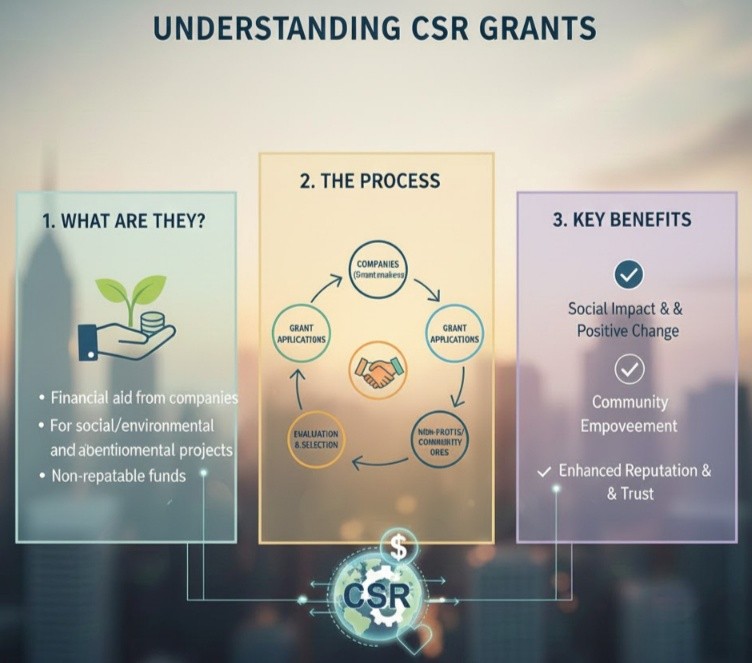
CSR Grants are allocations provided by companies or their foundations to eligible NGOs or implementing partners to run approved CSR projects. These grants can provide support to cover direct project costs, some overhead and capacity building support.
Common types of CSR grants are:
- Project grants: time-limited funding for a distinct project with measurable outcomes, which is usually for 1-3 years.
- Long term program grants: larger, multi-year funding collaborations that support flagship programs in major priorities such as education, health, livelihoods or the environment.
- Capacity building grants: funding to assist the NGO with capacity building of the NGO through training, systems, technology or monitoring system support, usually in tandem with program support.
All CSR grants contain definitive reporting, compliance, and impact measurement requirements that NGOs must be prepared to fulfill. India Is Us made it easy for NGOs to accomplish that by supporting them with project design, documentation, and transparent reporting so they can do that confidently.
Funding from corporate social responsibility has become one of the most significant and stable forms of income for NGOs in India. It allows NGOs to:
- Receive dependable, predictable financial support, rather than relying solely on small, one-time donations.
- Expand successful pilot projects into larger projects covering more communities or geographical areas.
- Invest in higher quality staff, systems, and processes, which directly improve the quality and scale of their impact.
To access CSR funding, NGOs frequently must have:
- Some sort of legal registration and at least 3 years of operations, depending on the funder.
- CSR-1 registration with the Ministry of Corporate Affairs if wanting to implement CSR projects directly under most corporate partnerships.
- Good governance, transparent financials, audited statements, and the ability to track and report outcomes.
India Is Us serves as an NGO support ecosystem that assists organizations with capacity building, sustainable growth and mobilizing donor funding, including corporate social responsibility (CSR) partnerships. The i2u team includes CSR experts, social impact practitioners and fundraising professionals who can assist NGOs through the complete CSR funding lifecycle.
Real-World CSR in Action:
What Top Companies Actually
Do
Tata Group: Creating and Developing Rural Youth Skills
The Tata Group is a long-time supporter of rural India in efforts like Tata Strive, a program that allows access to skills for young men and women from disconnected communities to secure quality, meaningful work, and improve their well-being and ways of life. This is a live project in progress, and working and earning for young people is at the core of the effort.

Infosys: Providing Digital Learning Education for Marginalized Communities
Infosys has prioritized education through the Foundation. Their programs have included providing schools with digital learning lab stations, gifts of smartboards, and scholarships and awards for students identified as having potential but no opportunity. They keep it simple: level the playing field for kids in the communities they represent and make it so kids everywhere can thrive in a digital new world.
Mahindra Group: Supporting Sustainable Farming
Mahindra is engaged with farmers through its “Rise for Good” initiatives. It provides better access to better farming equipment, information related to sustainable practices, and seeds that are stronger and more resilient to climate. These initiatives allow farmers to cultivate and produce more, with less burden, while providing genuine economic resilience for rural communities.

Hindustan Unilever: Promoting Health and Reducing Plastic Waste
Hindustan Unilever is active in hygiene campaigns in schools and low-income communities. The “Lifebuoy Handwashing Program” has educated more than 50 million children about healthy practices. In addition, Unilever highlights the need to reduce single-use plastics in its products by retrofitting packaging and developing recycling campaigns in the country, stressing that hygiene and sustainability are aligned.

Coca-Cola India: Water Body Restitution
Coca-Cola India's initiative "Replenish India" is dedicated to returning to the water used in production. This often involves the restoration of local ponds and lakes. For communities that are facing water-stressed regions, this means a more reliable supply of clean water for communities that really need it in this country of water scarcity in many regions.
Reliance Industries: Increasing Accessibility of Healthcare in Rural Areas
Through the Reliance Foundation, Reliance Industries has built healthcare centers in some of the most remote areas of India. These centers have provided low-cost (and in some cases free) healthcare services and health awareness programs that have improved the general health of populations that would otherwise have to travel hours to seek health care.
ITC: Empowerment through Rural Education and Women
ITC has an enormous impact: from more than 250,000 children reached through supplementary education centres to almost 15,400 women reached through self-help groups, the company's CSR is based on local empowerment in community development rather than providing aid.'

HDFC Bank: Building Better Schools
HDFC Bank has a "Parivartan" program that has built and renovated schools, established toilet facilities and provided clean drinking water to rural classrooms - with each initiative contributing to a safer, healthier and more positive environment for children to learn across India.
Hitachi Lift India
Hitachi Lift India has focused on inclusion, women's health, and community resilience in its CSR through a collaborative approach with various specialist NGOs. They are supporting initiatives that provide immediate assistance as well as long-term dignity and opportunity to disadvantaged and vulnerable populations.
These are some of the largest players who are addressing real, measurable changes across the country, one child, one farmer and one village at a time. Good CSR can change lives in every place and in every way.
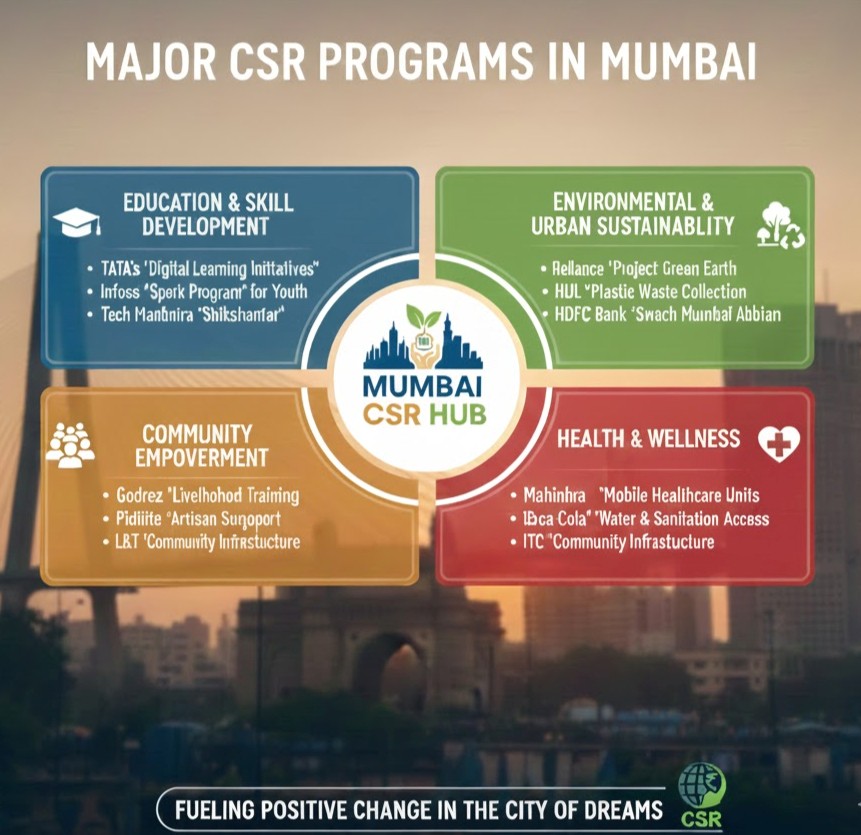
CSR Programs in Mumbai
Mumbai attracts large amounts of CSR funding because it has dense urban slums, a strong NGO ecosystem and is home to many large corporations. The common areas of CSR focus in Mumbai are:
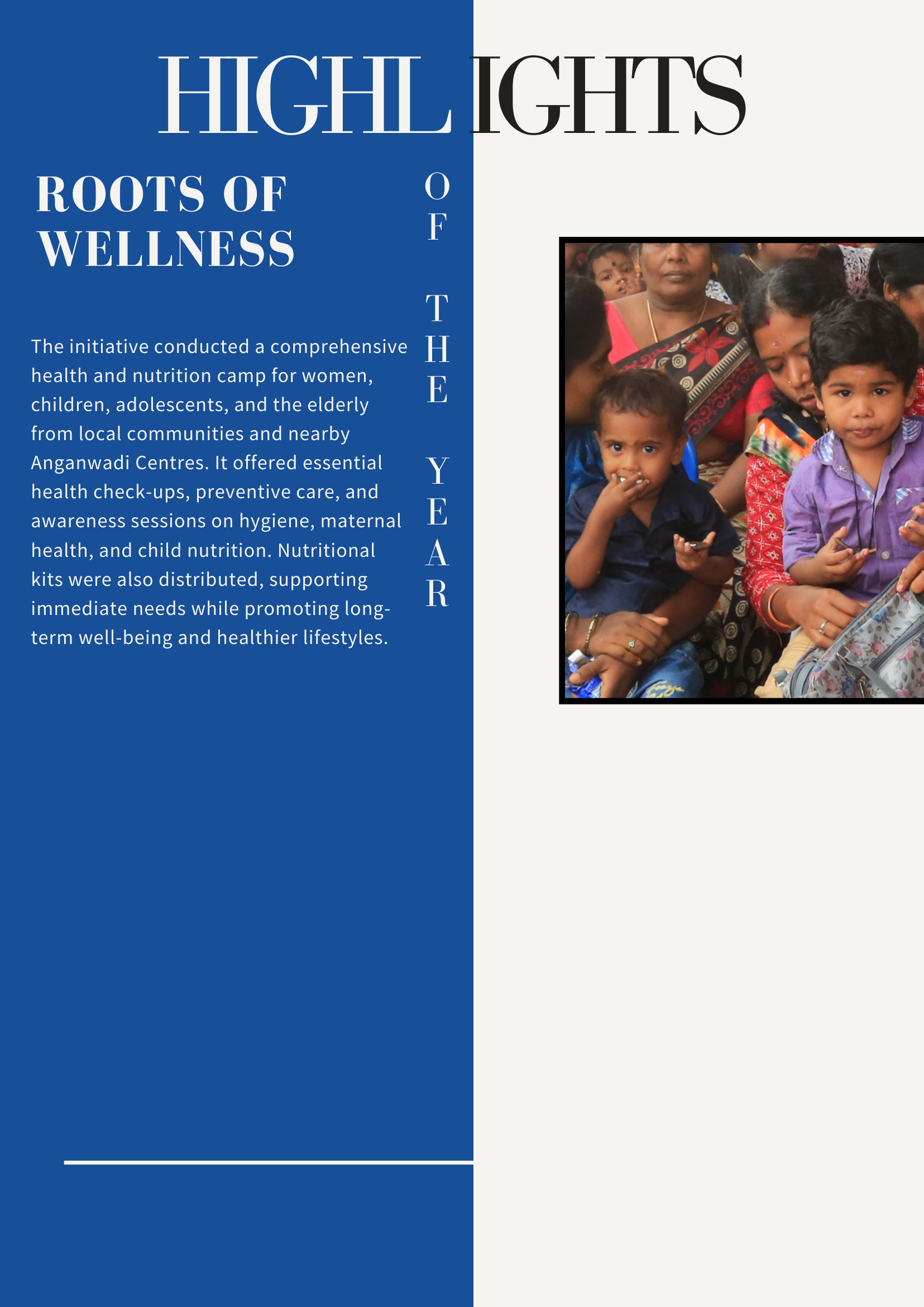
- Health and nutrition: organizing community health camps, supplying nutrition support in construction sites and slum areas, and providing cancer screening services as part of collaborations with established health non-governmental organizations (NGOs).
- Slum development: establishing educational centres for slum children, developing youth mentoring programs, and improving access to basic services.
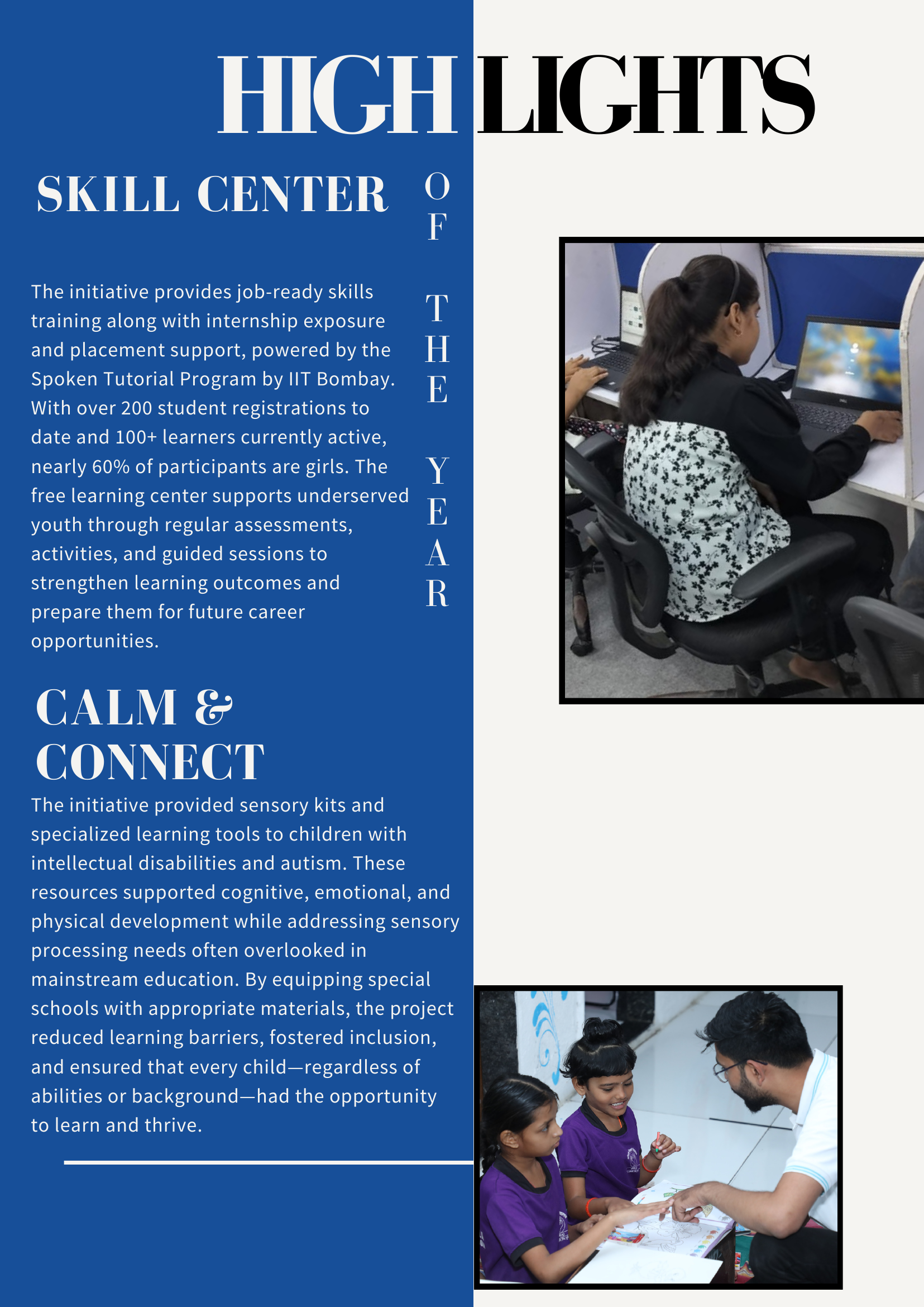
- Youth and digital education: free learning centres, STEM and digital education programs, and youth engagement in sports or the arts.
India Is Us is already working with NGOs in priority action areas of child welfare, education, health and nutrition, and poverty alleviation, which are all the core components of CSR funding in Mumbai's unserved communities. This allows corporations to quickly identify trusted partners in Mumbai and initiate high impact, transparent and accountable CSR activity and funding.
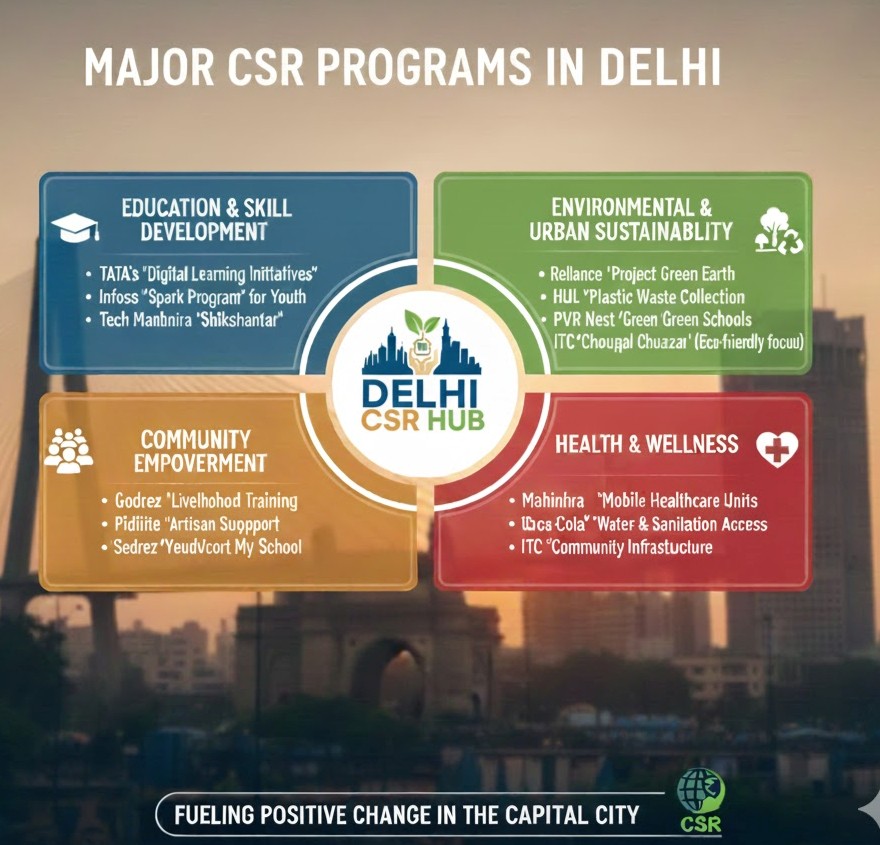
CSR Programs in Delhi NCR
Delhi NCR employs the largest share of funding for CSR, with the bulk of it going to education, health and environmental projects. In recent years, the highest level of funding has gone to education, followed by health and environmental sustainability work.
Examples of CSR programming in Delhi NCR can include:
- Pollution and environment: air purification initiatives, waste management, tree planting, and education initiatives.
- Education and skills: support to government schools, digital learning programs, education programs for youth and women, and livelihoods programs.
- Women's safety and empowerment: safe public transit, gender sensitization, online safety, economic empowerment through self-help groups, and women's safety and prevention programs.
- Health: school health sub-centers
India Is Us partners with NGOs across Delhi NCR on education, women's empowerment, inclusivity, WASH and health care to enable businesses to plan meaningful partnership programming in the capital region.
Primary reasons to engage with India Is Us for CSR funding and implementation:
Extensive CSR and NGO experience:
The i2u team is made up of professionals from the social development sector, including past CSR professionals, funders, fundraising professionals, communications professionals and volunteers.
Strong NGO network:
i2u works with hundreds of NGOs across India, with all NGOs being verified for working in twelve priority social issues including literacy and education, health and nutrition, environmental conservation, women's empowerment, poverty alleviation, elderly care, animal welfare, skills
Full end to end CSR partnership:
From strategic planning and selection of NGO partners to program monitoring, communications and reporting alternative transparency, India Is Us supports the entire CSR lifecycle.
Support for documentation and proposals:
i2u supports NGOs and corporates with CSR documentation, preparing a proposal and narrative of impact to meet compliance and communications needs.
For companies, this means a more streamlined, impactful CSR project without the burden of building everything from the ground-up, and for NGOs, it means stronger access to CSR funding agents and guidance for achieving sustainability and scaling their work responsibly.
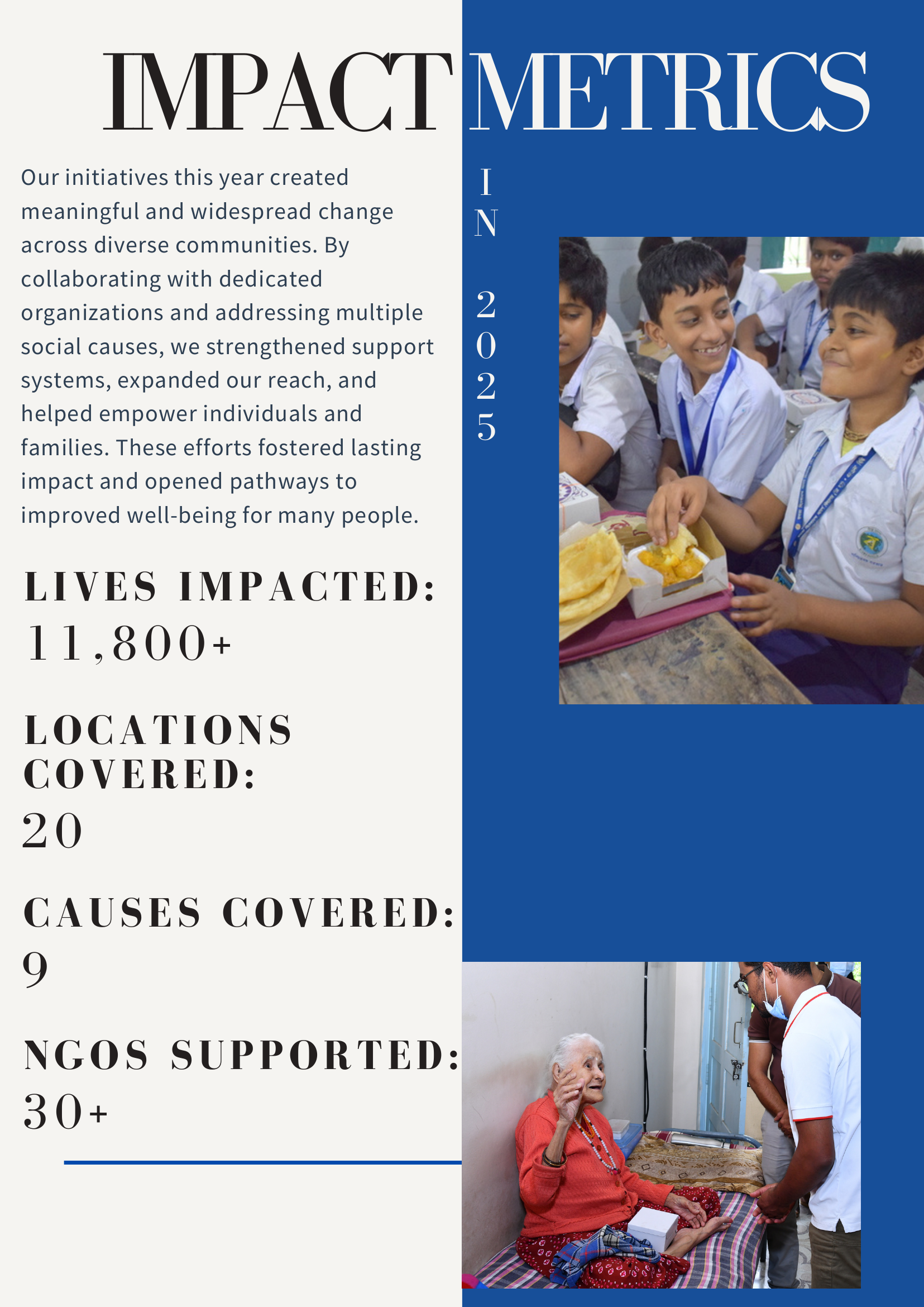
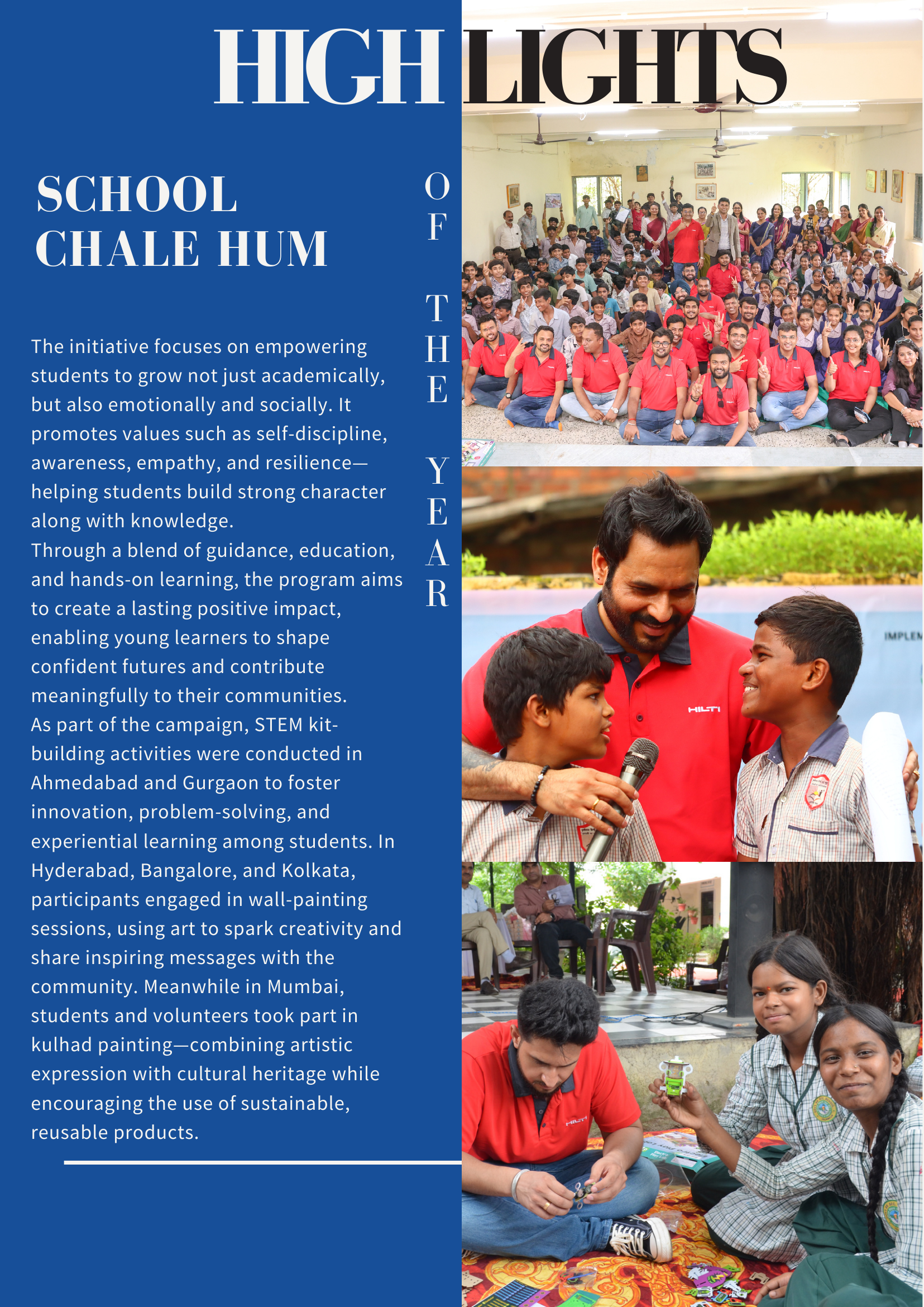
CSR Report – Visual Overview
A snapshot of our CSR initiatives, funding models, impact areas, and implementation strategy.


Frequently Asked Questions (FAQs)
Which companies have a CSR obligation?
According to Section 135 of the Companies Act, the applicable CSR provisions apply to companies with a net worth of not less than ₹500 crore, a turnover of not less than ₹1,000 crore or a net profit of not less than ₹5 crore in a financial year.
How much funding do companies have to provide towards CSR?
A company that is obliged to provide CSR funding must spend not less than 2 percent of the average net profits during the three financial years preceding the financial year in question.
Can NGOs apply for CSR funding?
Yes, NGOs can typically receive CSR funding if they meet eligibility requirements such as being properly registered, being an established organization, and obtaining CSR-1 registration, if applicable, when implementing CSR projects directly. Many corporations route CSR grants through consistent organizations that are perceived to have long-standing impact and governance.
What types of projects are permissible for CSR Funding?
Projects must be within the areas identified in Schedule VII of the Companies Act, such as education, health, rural development, the environment, women's empowerment, poverty alleviation and skill development, assistance for persons with disabilities and heritage conservation.
Can government programs receive CSR funding?
CSR funding may allow support for other government programs or contributions such as relief funds, as long as they are aligned with Schedule VII of the Companies Act and its current CSR rules. In practice, most companies also fund projects directly, through NGOs or other implementing partners, to see the impact on the ground.
Do NGOs need CSR-1 registration to receive CSR funds?
The at most scenario of an NGO being involved in a direct CSR implementation partnership will require them to register by filing Form CSR-1 on the MCA portal, which makes them a registered, eligible implementing agency. This registration provides companies with a quick check on compliance before dispersing CSR funds.
Can companies work with multiple NGOs on various CSR projects?
Yes, companies partner with two or more NGOs in different geographic areas or thematic areas to diversify their impact and reach. India Is Us facilitates this by onboarding credible NGO partners and helping corporates manage multi location or multi theme CSR portfolios through one coordinated platform.